Monday, June 18, 2018

Tuesday, June 12, 2018
Monday, June 11, 2018
Increase Summer Focus by Embracing Intentional Distractions
 Boost productivity by embracing distractions.
Have you ever considered having summer hours? In my small business, we have summer hours that start in June and go all the way to the end of August. Well, what does that mean? It simply means we finish early on a Friday afternoon.
Now, what I know to be true about where I live is everybody wants to escape and enjoy the beautiful summer weather. Some people have shore houses or lake houses or they want to go to the beach.
Can you create summer hours? What about giving your team flexibility to be able to work from home, outdoors or remotely on a Friday? Could they leave the office a little earlier so they can enjoy the beautiful sunshine and maybe avoid the crazy traffic that starts on a weekend? Does your business allow people to be more flexible in the summer?
You see, what I think is important is if you want to boost productivity, if you want to pay attention to what needs to get done, it means you also have to make time for play. So often, our team works so hard, working and answering emails at night, taking meetings after hours, attending conferences, and yet we don’t always give them the time to play.
Take the Summer Challenge
Can you make your more productive summer more fun? Can you have more play? Now, the easiest way to do is book it in. Create easy things. Like maybe people can go home early every other Friday or maybe you have people who alternate so that something is also covered in your office, but that they get the opportunity to work remotely. What are some ways you can implement summer hours or intentional play? Book it in.
Create systems allowing your team can work remotely. Provide employees with a flexible work schedule so they are off every Friday, or every other Friday. Maybe they could even extend the weekend. It could go to Monday. You just need to find what works for you.
Turn on your “Out of the office.” Make the message fun so others know you won’t be around but would be delighted to help them when you return.
If you decide on summer hours, can you make it fun, make it playful? Maybe with a few systems in place, you can have meetings outside. Allow the team to understand the systems, make sure the team understands the protocols and policies. Let’s redirect phone lines. Let’s put “Out of office” messages together, and let’s make sure we make the most of our summer. Step away from your devices. Hang up the phone. Get out in the sun and enjoy your summer.
The post Increase Summer Focus by Embracing Intentional Distractions appeared first on Neen James.
Sunday, June 10, 2018
Pay Attention in a Matrix Organization to Achieve Results
 How can you GET and KEEP People’s Attention in a Matrix Organization to Achieve Results?
Operating cross-functionally, across geographies, across business units in an ever-fast and complex matrix organization is challenging. It requires self-awareness, tenacity, patience and intentional attention.
To shine as a leader in a matrix environment you have a responsibility to demonstrate strong communication, networking, advocate building, influence, and powerful personal branding skills.
To leverage relationships, communicate across time zones, and recognize different company cultures in an environment where reporting lines are tricky, you MUST pay attention.
The benefits of paying attention in this environment include opportunities to meet (and impress) other leaders, attract and retain top talent, accelerated project completion and career advancement.
Implement these strategies and you will succeed in your matrix organization:
Build relationships – your ability to network across multiple business units and with different levels in your company will ensure your success. Do people see your name in their inbox and answer it immediately? Do others instantly respond to your text messages? Do people happily accept your meeting invitations? If not, you may need to invest time creating stronger relationsips and networking in a variety of ways.
Identify informal leaders – every team has an informal leader. Every team has someone that may not have the title of manager/ supervisor/ director but the whole team knows they are the ‘go-to’ person. Find them, network with them, and learn as much as you can about team dynamics and their leadership style. This person will help you navigate that team, company politics, and leadership and will also potentially became an advocate for you.
Create advocates – while improving your relationship-building skills, identify people with teams who can become your advocates. Someone who has an idea of your responsibilities and projects and is willing to help communicate your value, make introductions, and advocate in meetings and with senior leaders if required. This is a longer-term strategy that requires focus, systems and dedication to relationships building. I create an appointment in my calendar every month and reach out to my list of 20 advocates.
Systemize thoughtfulness – I believe that paying attention requires systems. Systems create freedom. Can you schedule a monthly appointment to reach out to people who you want to stay top of mind with? I have a list of20 people and I send them books, articles, TED talks, and if I am out and about and see something that reminds me of them, I pop into the post. How can you dedicate time monthly to identify relationships you want to build, create a list of advocates and then systemize thoughtfulness?
Articulate your role – learn how to quickly articulate your role, the value you add and provide a project update. You need to always be prepared to quickly share how your team is achieving results, how they are adding value, and sometimes defend timelines. Learn the skill of briefly describing how your work affects others in the organization so you are prepared in every meeting, teleconference, and town hall or if you run into a leader in the elevator. Look for opportunities to promote your team and build relationships.
Book 15 minute tele-coffees – a tele-coffee is where you make a coffee and I make a coffee, and we talk on the telephone (I do tele-cocktails on a Friday… love those). Scheduling quick catch ups with other leaders internally will allow you to build relationships, understand their objectives, focus on sharing your team value and quickly assess if you need their support and engage them in future.
Attend team meetings – offer to attend other’s team meetings (virtually or in-person) to learn about other’s challenges, objectives and workflow. Offer to give an update of your team’s projects or responsibilities to help educate others.
Know communication preferences – learning the best way to communicate others in a matrix organization will accelerate decisions and workflow. Do your internal clients prefer email, phone, instant message, and text or in-person meetings? Once you learn people’s preferences make a note and share this with your team.
Get creative – do you have to attend every meeting? Do you have to be on every teleconference? Identify the purpose of meetings and if your presence is required the whole time, or if you can send a team member, or if you can just receive notes? Be creative in the way you contribute to other teams and find ways to leverage technology.
Monitor time zones – be kind when scheduling across global time zones. Use a variety of timeframes so it is kind to everyone and not just the same time every week or month because it is convenient for one team. If the meeting time is going to impact you personally, have the courage to speak up and suggest alternatives.
Respect protocol – we have organization structures for specific reasons; don’t go over someone’s head or around someone when possible. Respect roles, responsibilities and hierarchy. If you aren’t achieving the results you need consider talking to people’s peers before you approach their leadership. Be kind. Show respect.
Demonstrate expertise – in all meetings, presentations, town halls, webinars, training sessions and social activities, look for ways you can add value to conversations. Be the subject matter expert and don’t speak up just so you can hear yourself speak. Ask yourself if that question or comment will add value to everyone in the room. If not, be quiet. If it will, share freely.
Make an impression – know the rules, strengthen your personal brand, develop relationships and navigate politics. When you are constantly thinking of others, prepared to promote your team and your project and willing to listen to others, you will be a successful, attentive team member in a matrix organization.
If you want more strategies on how to personally and professionally be more intentional with your attention, to grow your personal brand, develop your communication skills and accelerate your productivity, check out Attention Pays for many more ideas.
The post Pay Attention in a Matrix Organization to Achieve Results appeared first on Neen James.
Wednesday, June 06, 2018
Tuesday, June 05, 2018
Pay Attention to your Audience: Stand in Service as their Speaker

I loved this Steal the Show podcast episode with Michael Port and Joey Coleman as they discuss the first 100 days as a professional speaker. This delightful, insightful podcast was created to inspire speakers to inspire their audience. They focus on how to pay attention to the audience’s needs and maximize their experience. I hope you enjoy!
Professional Speakers need to have strong beliefs, lightly held.
Yes, there’s contrast in that statement, but contrast is the beauty of performance. The job of a performer is to deliver a strong message while simultaneously being open to audience feedback. This is the tricky, two-sided nature of the job—one must possess the skills to provide both a powerful experience for the audience and a relatable openness during the socialization that occurs after a speech.
On today’s episode of Steal the Show, we are joined Professional Speaker, Joey Coleman. For over a decade, Joey has helped organizations retain their best customers and turn them into raving fans through his entertaining and very actionable keynotes, workshops, and consulting projects.
In this conversation, we unpack Joey’s Wall Street Journal bestseller, Never Lose A Customer Again. Joey provides insight for anyone trying to take their career to the next level. From the novice public speaker seeking his/her first paid gig to the amateur writer attempting to finish his/her first book, Joey’s insights will prove to be valuable.
You can order Joey Coleman’s Never Lose A Customer Again here.
(click to tweet)
Steal the Points
- Contrary to popular belief, not every relationship needs to be a long-term relationship.
- Usually, the audience’s expectations are extremely low.
- The tactics speakers use to make themselves feel comfortable typically make the audience feel uncomfortable.
- Connection happens quicker when the people are at eye-level.
- Research shows that humans are afraid of those who are bigger than them.
- Figure out what the audience needs before stepping on stage, and deliver that to them.
- Listen to all of the speakers to hear what the audience has already heard.
- When giving a speech, recognize that it’s difficult to be in the audience.
- Many audience members need time to process the speech before asking questions.
The post Pay Attention to your Audience: Stand in Service as their Speaker appeared first on Neen James.
Wednesday, May 23, 2018
Thursday, May 17, 2018
Book Review: Company Culture for Dummies by Mike Ganino
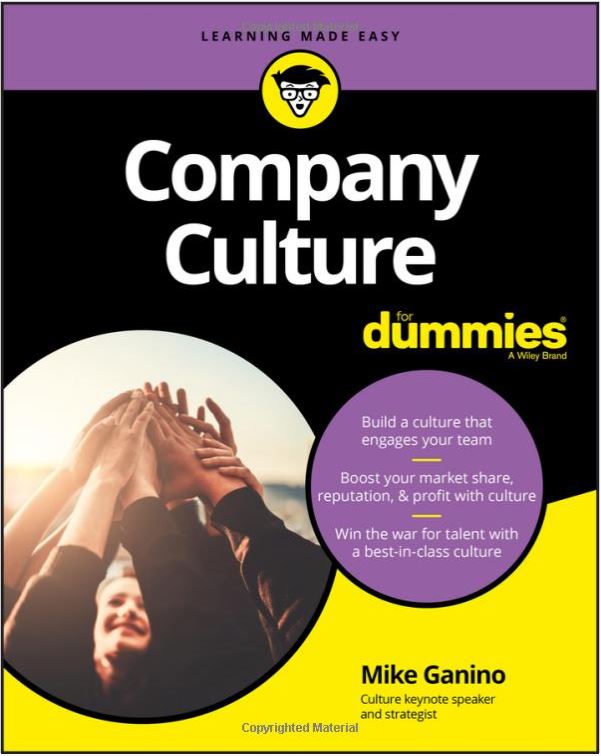 Organizations around the world are looking for the “secret sauce” to create strong company cultures—and this book lets you in on what you can do to share the same culture that drives places like Google, Southwest, and Wegman’s to succeed.
Inside, expert author on corporate culture Mike Ganino distills company culture down to the four core elements that you need to consider when making any business decision. Packed with real-world examples and practical approaches to help you build a culture that drives performance, increases bottom line results, and creates brands that people talk about and remember, this is the book you’ll want to keep close by as you create your own unique culture.
- Implement and manage cultural change effectively
- Apply key principles to achieve organizational goals
- See how new technologies influence organizations
- Retain employees and attract new talent
With this helpful guide, you’ll boost your company’s culture in no time!
Take a look at my video review and decide for yourself if this book is for you.
The post Book Review: Company Culture for Dummies by Mike Ganino appeared first on Neen James.
Wednesday, May 16, 2018
Tuesday, May 15, 2018
Thursday, May 10, 2018
Book Recommendation: Never Lose a Customer Again by Joey Coleman
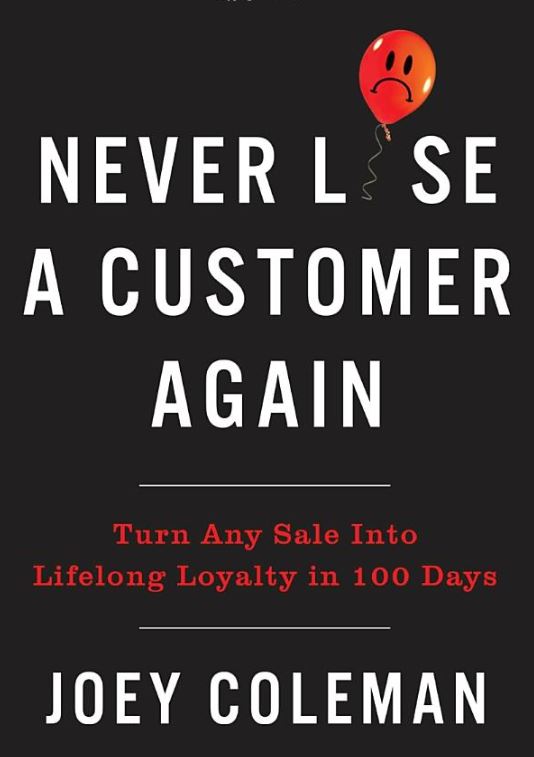 Coleman’s theory of building customer loyalty isn’t about focusing on marketing or closing the sale: It’s about the First 100 Days® after the sale and the interactions the customer experiences.
While new customers experience joy, euphoria, and excitement, these feelings quickly shift to fear, doubt, and uncertainty as buyer’s remorse sets in. Across all industries, somewhere between 20%-70% of newly acquired customers will stop doing business with a company with the first 100 days of being a new customer because they feel neglected in the early stages of customer onboarding.
In Never Lose a Customer Again, Coleman offers a philosophy and methodology for dramatically increasing customer retention and as a result, the bottom line. He identifies eight distinct emotional phases customers go through in the 100 days following a purchase. From an impulse buy at Starbucks to the thoughtful purchase of a first house, all customers have the potential to experience the eight phases of the customer journey. If you can understand and anticipate the customers’ emotions, you can apply a myriad of tools and techniques — in-person, email, phone, mail, video, and presents — to cement a long and valuable relationship.
Coleman’s system is presented through research and case studies showing how best-in-class companies create remarkable customer experiences at each step in the customer lifecycle.
In the “Acclimate” stage, customers need you to hold their hand and over-explain how to use your product or service. They’re often too embarrassed to admit they’re confused. Take a cue from Canadian software company PolicyMedical and their challenge of getting non-technical users to undergo a complex installation and implementation process. They turned a series of project spreadsheets and installation manuals into a beautiful puzzle customers could assemble after completing each milestone.
In the “Adopt” stage, customers should be welcomed to the highest tier of tribal membership with both public and private recognition. For instance, Sephora’s VIB Rogue member welcome gift provides a metallic membership card (private recognition) and a members-only shade of lipstick (for public display).
In the final stage, “Advocate,” loyal customers and raving fans are primed to provide powerful referrals. That’s how elite entrepreneurial event MastermindTalks continues to sell-out their conference year after year – with zero dollars spent on marketing. By surprising their loyal fans with amazing referral bonuses (an all-expenses-paid safari?!) they guarantee their community will keep providing perfect referrals.
Drawing on nearly two decades of consulting and keynoting, Coleman provides strategies and systems to increase customer loyalty. Applicable to companies in any industry and of any size (whether measured in employee count, revenue, or total number of customers), implementing his methods regularly leads to an increase in profits of 25-100%.
Working with well-known clients like Hyatt Hotels, Zappos, and NASA, as well as mom-and-pop shops and solo entrepreneurs around the world, Coleman’s customer retention system has produced incredible results in dozens of industries.
His approach to creating remarkable customer experiences requires minimal financial investment and will be fun for owners, employees, and teams to implement. This book is required reading for business owners, CEOs, and managers – as well as sales and marketing teams, account managers, and customer service representatives looking for easy to implement action steps that result in lasting change, increased profits, and lifelong customer retention.
Why you must get Never Lose a Customer Again, by Joey Coleman.
The post Book Recommendation: Never Lose a Customer Again by Joey Coleman appeared first on Neen James.
Wednesday, May 09, 2018
Monday, May 07, 2018
How to Achieve the Ideal Workday
 Sit back and imagine your ideal, perfect workday. What would it look like? Would it be a day without meetings? Perhaps it would be a day without interruptions. Maybe your ideal workday is one where you are focused on accomplishing the monumental task that has been occupying too much headspace.
When you consider what your ideal workday looks like, it’s important to make it a reality. While not every day can be ‘ideal,’ many can with a little strategic thought and attention to planning.
Here are some strategies to help you achieve your ideal workday:
Prepare today for tomorrow. Schedule the last 15 minutes of each workday to review what’s on deck for the next day. These strategies will ensure you have an ideal start to the next day.
1. Scrutinize your calendar and the meetings scheduled. Are they necessary – do you have to attend? Are you prepared – do you have an agenda?
2. Consider what projects you want to accomplish and the deadlines that are looming. In your calendar, set aside chunks of time to focus exclusively on accomplishing those tasks.
3. Tidy up your workspace to eliminate distractions upon starting work in the morning.
4. If you travel for work, host video conference calls or face-to-face meetings, take a few moments to consider what you are going to have to take with you and set it aside.
5. Visualize what you need to wear to be comfortable, sharp and focused at work the next day. Lay it out, press it and accessorize the night before.
6. If you’re going to make it an early day, prepare your breakfast the night before.
Make a Game Plan: At the beginning of each workday, write down three non-negotiable tasks that must be accomplished before ending your day. Maybe it’s making sales calls or completing a project. Either way, keep the list short to help increase the sense of urgency and focus needed from you.
Contemplate Quiet. When you allocate time for specific tasks, use the time wisely. The best way to achieve this is to have a quiet, distraction-free workspace ensuring your total focus.
- Honor the time set aside in your schedule for accomplishing specific tasks, as if it were a client meeting. Don’t be late or allow interruptions.
- Close the door. Our pro-open-door society is great for engaging employees and colleagues; however, can be challenging to working in an uninterrupted environment. It’s okay to close the office door when you need the time to focus exclusively on the tasks at hand. If you don’t have a door, consider using headphones as a ‘do not disturb’ message you can send to others.
- Go off-site or seek an alternative, quiet location when you need to ensure interruptions won’t occur.
The post How to Achieve the Ideal Workday appeared first on Neen James.
Thursday, May 03, 2018
Friday, April 27, 2018
Tuesday, April 24, 2018
(Not So) Common Sense Attention
 You would think paying attention would be easy, common sense really. And yet, we struggle to pay attention to the aspects that matter most. As leaders, we have one life to lead, on this one planet, and yet we juggle a multitude of roles at work, at home, and in our communities. To help us focus our attention and not split this precious resource, we need to create a simple structure for how to give intentional attention in all aspects of our life.
- Personally – Be Thoughtful with who gets your attention. Intentional attention starts with you. To assist and serve others, you have to focus on you first. You have to be the most confident, successful person you can be. Then you can focus on the VIPs – very important people – in your life, both personally and professionally, who also need your attention.
- Professionally – Be Productive as an individual and leader and take action on what is the most important use of your attention. Again, we focus on you first so you can achieve your professional objectives. Only then can you help your team overcome their attention challenges and achieve better results.
- Globally – Be Responsible for how you contribute to your local community and the world around you. find something you believe in and then give intentional attention to that passion to create a bigger impact.
While these philosophies and thoughts may seem common sense – and they are – they are not common practice. Most of us just need a (not so gentle) reminder every now and then to do the things we often already know we should be doing.
Today, I challenge you to invest one minute, in one interaction, to create one significant moment, for just one person that may create one memory that will last a lifetime.
Pick up a copy of Attention Pays today and begin to change the way you give intentional attention personally, professionally, and globally.
The post (Not So) Common Sense Attention appeared first on Neen James.
Monday, April 23, 2018
Tuesday, April 17, 2018
Our Addiction to Social Media
 Apps and social media are stealing our attention. We have become obsessed with likes, retweets, and finding the perfect gif response to post.
We miss the amazing play or moment at the concert because we are updating our Instagram.
We miss the bus because we are enthralled with the latest video on one of our YouTube subscriptions.
We miss our floor on the elevator because we were reading Twitter. We miss the green light because we are checking Facebook.
The CEO of a technology and data company recently shared with me his frustration about one of his senior leaders who appeared to be addicted to Candy Crush. In every spare moment, his director was online and had to be counseled twice in one week. The leader tried to explain it was his form of relaxation but after much questioning, he reluctantly admitted that his workload had fallen behind, he had emails in his inbox that hadn’t been answered for five days, and he was two weeks behind in developing a database for a client. Remember, this is a smart, functioning adult.
Maybe you don’t play Candy Crush but you feel a need to check every notification of a new email, text, tweet, or post on Facebook or LinkedIn, or maybe you have created Pinterest boards to plan your perfectly designed office or maybe you monitor every like you get on Instagram?
Gut check time: How much of your attention is being stolen by apps and social media?
Do we really have to include in our employee policies that people can’t play Candy Crush or check social media at work? Possibly. Some of our obsession is driven by habit and some of it by boredom. And it could be that the voyeuristic interest in other people’s lives is more exciting than whatever work is in front of us.
Regardless, the addiction is real. Technology, social media companies, and app development companies are competing for our attention and intentionally feed our addictions in hopes we will spend more time on their systems, enveloped by their tools. Either way, it demands are decaying our ability to truly connect in a meaningful way with others that is mindful, intentional, and purposeful.
I doubt anyone on their deathbed will say “I wish I’d posted one more tweet or picture.” Instead, I bet they’re likely to say “I wish I’d paid more attention to the people I was with rather than those on social media.”
The post Our Addiction to Social Media appeared first on Neen James.
Sunday, April 15, 2018
Tuesday, April 10, 2018
Intention Makes Attention Valuable
 Ever thought about the value of paying attention?
Attention sometimes gets a bad rap in today’s society. Perhaps that is because we’ve come to associate the concept of attention with unrelenting selfies that scream “look at me’ and the constant sharing of eery details of one’s life on social media. That is not the type of attention I want to discuss. The type of attention that truly matters and makes a difference in our lives is intentional attention – the kind that helps you show up as the best version of yourself in all
roles of your life.
We all want and need attention from the people who are important to us. We want to feel we are the center of somebody’s attention, even if we don’t want to be the center of everybody’s attention.
Attention is critical throughout all aspects of our lives – including our jobs. We need focused attention from our leaders and employees to get work done, to achieve results, and to succeed. our customers and our teams need attention, too. People want to be seen and heard and to know that their concerns are being addressed.
Attention is not optional; it’s vital. It is attention that drives the results we all want and need.
Perhaps this why we always hear the phrase “Pay attention!” Our parents told us to pay attention. Our teachers told us to pay attention. We tell our kids to pay attention. These are all valuable life lessons.
The issue is that most of us are giving distracted, unfocused attention (like texting while driving) to everything and everyone we come in contact with. That kind of attention is worthless. It sends the message that the focus of our attention has little value, meaning, or importance to us.
Intention is what makes attention valuable.
Intentional attention is active. it involves seeing, hearing, and thinking about who is with you and what needs your focus right now. it requires us to choose consciously, act deliberately, and invest transformationally with our attention.
If you are ready to intentionally invest your attention in what matters at the moment; the people you are talking to, the priorities you are acting on, and the passions you are pursuing, it’s time to pick up a copy of Attention Pays and start paying attention to what matters most.
The post Intention Makes Attention Valuable appeared first on Neen James.
Tuesday, April 03, 2018
Protect Your Schedule, Time and Attention
 Are you constantly competing with others over your schedule? Do you feel inundated by a barrage of interruptions and distractions each day that leaves you feeling as if you worked like a crazy person all day and accomplished nothing as a result?
In my new book, Attention Pays, I outline strategies for busy professionals to protect their time and attention from being fritted away by anyone and anything asking for it.
Here are seven strategies you can being implementing today to take control of your schedule and permit you the time necessary to leverage your attention to accomplish more each day.
Create a personal daily strategic 15-minute appointment – Take this time to determine your top three non-negotiable activities you must complete before you sleep tonight. Several years ago, I challenged an executive leadership team at Comcast to invest 15 minutes of their attention every day in a strategic appointment. They say awesome results, become the highest performing team in their region. Their shared increased focus allowed them to prioritize completion of strategic objectives and invest in their people’s development instead of being distracted by everyday busyness.
Schedule your morning routine – We outlined this routine in Chapter 3 of my new book, Attention Pays. It’s critical that you get this on your calendar so that phone calls or meetings don’t encroach on this important time.
Assign certain activities to specific days of the week – This system has you group regular activities together to maximize productivity and minimize distractions. Will it work seamlessly with every week in the same way? no, but with a system, your team or assistant can schedule meetings on designated days. We worked with a financial services executive to design her ideal week. here is what hers looked like. Yours, of course, will be different:
- Monday: Meet with team members, senior leadership, and her boss in the office.
- Tuesday to Thursday: Industry and vendor networking events, client appointments, presentation preparation, and travel. These days were spent outside the office and included a work-from-home day.
- Friday: As she enjoyed being home for weekends, any meetings were local and never scheduled to finish later than 5pm. If no meetings were scheduled, she focused on strategizing for the upcoming week and catching up on administrative work.
Schedule no talk days – My best friend manages multiple companies, raises my two beautiful God-daughters, volunteers in her community, and enjoys working with her clients. She discovered that on days she doesn’t talk to anyone, she’s massively productive. So, she started scheduling no-talk days – days with no appointments, which are dedicated to strategy and achieving goals. As an extrovert, I found this strategy especially helpful. Could you do this once a quarter to make more progress toward your bigger goals?
Schedule service days – I allocate one day a month on my calendar for pro bono assistance to people in my industry who need help. could you add a service day to your calendar?
Time block – Schedule space in your calendar for strategy, email review, meetings, social media engagement, and personal time.
Create visual recognition systems – Use color-coding to simplify your life. My calendar uses a variety of colors to show speaking, travel, consulting, personal appointments, and administration and business development.
Block out personal time in advance and honor the appointment with yourself as you would a client or employee.
Pick up a copy of Attention Pays to learn more about creating an extraordinary life by ‘unplugging’ from the constant barrage of disruptions and ‘plugging in’ to the tools, strategies, and mindsets that allows you to harness your attention to reach your highest potential.
The post Protect Your Schedule, Time and Attention appeared first on Neen James.
Thursday, March 22, 2018
Monday, March 19, 2018
Without Focus, Your Team Will Fail (So Will You)
 I can tell a lot about the leadership and culture of an organization just by mingling with the employees. What I often witness is an unintended disconnect between what leadership thinks employees are focusing on, versus what they are.
As a result, employees are overwhelmed. They feel overworked and underappreciated as they run frantically on a daily hamster wheel chasing orders they’ve received by leadership.
Leaders, on the other hand, rarely see themselves as the problem. Instead, they get frustrated with employees who don’t make progress, aren’t productive or producing results. Leaders lose hope when their teams frequently ask for deadline extensions or say the work simply cannot be done.
Leaders rarely see themselves as the problem, when in reality, their bad habits are to blame.
Click To Tweet
Does this scenario sound familiar to you?
What many leaders are guilty of is initially setting priorities, and then derailing team focus by tossing out non-priority related requests throughout each day. It’s not that any leader wants to see their team fail. They just don’t recognize the frequency of their non-priority requests and the amount of time it can steal attention away from employees’ top goals.
If you want to succeed, you must set your team up for success. The only way to do that is to focus your attention on what matters most, then using this as the filter for all decisions and delegation requests thereon.
Here are 5 ways you can help your team maintain focus, boost productivity, increase engagement and boost profits.
1. Establish a non-negotiable set of goals. Whether it’s each day, week, month or quarter, meet with your team and cover the non-negotiable goals that must be reached for success to occur. Create priorities and tasks necessary to accomplish those goals.
2. Communicate frequently. Remind your employees frequently of the goals you agreed up as a team. Challenge each and every one of them to use those goals as personal filters for their own work and focus.
3. Empower employees to Say ‘No.’ Employees want to please their boss. They want to pursue solutions to areas of stress and ease the burden of leadership. Their natural need to please can easily derail them from priorities and can make them a target for others to steal focus. Empower and implore your team to say ‘no’ to any requests of their time that don’t directly align with the goals and priorities set. That means even empowering them to say ‘no’ to YOU!
4. Be mindful of your requests. Ever sent an employee an email that started out by saying “Wouldn’t it be great if….” Stop it, now. This is where employees get derailed in their focus and lose time and attention on what matters most. Remember their need to please? Well, if you are tossing out great ideas or concepts without filtering them through your agreed upon priorities, your employees will consider this to be a delegation, not a simple conversation. They will stop what they are working on to pursue an answer for you. Before suggesting or asking anything of your team members, ask yourself if the requests fall square in line with the priorities.
5. Stop messaging them after work. Nothing will burn employees out faster than a non-stop barrage of emails, texts, and calls after work hours. Give them the break they deserve. Let them focus on friends, family, home life, fitness, and whatever else matters to them personally. Discourage them from checking work-related emails after hours and encourage their personal priorities. Permit them to rest. In turn, you’ll have a more engaged, well-centered team the next business day.
Company culture and tone starts with you. If you want a well-balanced team who is engaged, positive and productive, start by concentrating your attention on what matters most. They, in turn, will do the same. Together, you can achieve deadlines, establish boundaries and create a happier, more productive and profitable organization.
The post Without Focus, Your Team Will Fail (So Will You) appeared first on Neen James.
Monday, March 12, 2018
You’re Attention is Being Stolen (and You’re Letting it!)
 “Hold that thought for just a moment.”
“Let me grab this call.”
“Now, where were we?”
How often have you uttered these phrases in conversations that were interrupted by a phone call, text message, or someone just popping into your office? How often have you been in the middle of a project or task that was stopped midstream to respond to someone else’s immediate need for your attention?
If any of these scenarios sound familiar, you are allowing your attention to be stolen.
In a world full of open-door policies and open-office concepts, our attention is like a wad of cash sitting in an unoccupied, unlocked car. It’s ripe for the taking, tempting anyone who comes within reach of it.
Click To Tweet
Time is our new currency and where we spend it is a choice. It certainly doesn’t imply that some things are always more or less important than others; it just means you must choose what is most deserving of your attention at that moment.
For instance, if you are on a deadline for a high-stakes project, it’s okay to silence your ringer, unplug from devices, close your door and concentrate – free from distractions. The deadline for that project is your highest priority. You don’t want to permit anyone or anything from stealing your attention away from it. Once the project is over, take a small break to rest, recover and refocus. Then, evaluate what else is required of you and prioritize your attention accordingly.
It’s that simple.
When you allow others to steal your focus from what you need to pay attention to, you give them time you can never get back. As a result, you feel the pressure of tighter deadlines which then challenges you to work at a faster rate of speed. When you can’t work faster, you wind up working longer, then cutting into the time you need to rest and recover with friends, family, and loved ones. In the end, you feel overwhelmed and overstressed – and for what? To allow someone to have your attention to meet their needs?
It’s not about being selfish, or about making others feel less important. It is about realizing we each only get 1,440 minutes in a day and we must choose how to spend it. If we want to live a life of more significance, we must pay attention to what matters most and implement methods necessary to do so.
Here are 10 tips to help you pay attention to what matters most in your day:
1. Schedule your day. Use your calendar to set aside times to return phone calls, answer emails, and respond to social media. Commit to your calendar of time as if it were a client. Don’t be late and refrain from going over time.
2. Silence your phone. Whether it’s a desk phone or cell phone, turn off the ringer. We have this brilliant tool called voicemail and it’s there for a reason. Phone calls can be returned when you are ready to give them the time and attention they deserve.
3. Close your door. The idea of an open-door-policy was never intended to allow anyone to barge in at any time. Schedule times in your day and let others know when you’re available to chat. Setting boundaries will not only ensure you can focus on time-sensitive tasks, it also ensures your undivided attention is given to those who need you during open-office hours.
4. Clear your clutter. Few things can steal concentration quite like incomplete projects sitting on your desk silently begging for your attention. Whether it’s papering in need of filing or projects yet to be completed, keep them organized in such a way that your workspace is clear from distractions.
5. Maximize your productive times of the day. Some of us are morning birds while others are night owls. Capitalize on your most productive time of day to complete the tasks requiring more attention, thought, and creativity.
6. Cancel meetings. 45% of meetings attended by professionals are thought to be a waste of time. If you’re attending meetings for the sake of attending, stop. If you’re hosting meetings out of routine, cancel them. Do not attend or host a meeting without a legitimate, well-thought-out agenda. Know why you’re being asked to attend and ensure everyone is on the same page.
7. Take routine breaks. No one can give their undivided attention to one project hours and hours on end. Take frequent breaks to step away from your desk, get fresh air, stretch and allow your mind to break from it’s concentrated state. You’ll find a renewed sense of focus upon return.
8. Reciprocate respect. If you want others to respect your time and need for focus, you must start by setting the example. If you create a reputation of popping into coworker’s offices unannounced, they will do the same for you. If you leave voicemails, followed by emails, followed by text messages, expect others to do the same. Demonstrate a respect for the time of others and respect for yours will follow.
9. Reiterate priorities. Whether you are a leader or individual contributor, knowing the priorities of your organization is key to your success. Ensure you understand them thoroughly, repeat them frequently and use them as a filter for your attention.
10. Stop working 24/7. Few of us can operate efficiently or effectively when we are always on call for work. After hours phone calls and emails can make us feel overwhelmed and unable to rest and recover from the day. As a result, our stress levels increase, and our relationships suffer. Your after-hours time must be tightly guarded and given to those who matter most. When you allow yourself to get the rest you need at the end of each day, your ability to focus and concentrate on the workday increases boosting your productivity and accountability.
When you begin to think of attention as our new currency, you can begin to shift your thought process around time as being a limited resource which must be managed responsibly and protected from those who wish to steal it.
The post You’re Attention is Being Stolen (and You’re Letting it!) appeared first on Neen James.
Monday, March 05, 2018
The Millennial Attention Gap
 I love the Millennial generation. They are my fave by far. I love their insights and ability to change quickly, and they can also learn from generations before them.
I was excited when I recently watched the movie, The Intern, about a Baby Boomer going to work for a young, hip start-up company. This company was very successful, full of bright ideas and innovative ways to succeed. Initially, the Millennial workforce looked as though they thrived in chaos, when in fact, they were suffering from the very methods that made them successful.
While the movie was a light-hearted comedy about an older generation fitting into a Millennial mindset, I couldn’t help but notice the number of mistakes the young professionals made because of information overload, a barrage of interruptions, and an obsessive need to multitask leading to a frantically fast-paced life. They worked together for hours on end yet knew little about each other. They celebrated professional success while suffering personal losses in relationships at home.
The movie was fiction. The situation was reality.
The Millennial generation wasn’t of the age of technological discoveries. They were born into the technological age we had already created. Our discoveries were their normal. They never knew life before the internet, texting, streaming and social media. Before most of them could walk, they could operate an iPhone. Many of them watched their first programs streaming from their parents’ devices while sitting in a restaurant for dinner. As the Millennials grew up, they formed new languages ripe with acronyms as they felt there was no time, or need, to write in full, complete sentences. Now that this generation has aged and entered the workplace, they struggle to turn their attention from devices and into real relationships that communicate openly, thoroughly and effectively.
At one point in the movie, a younger employee approached the Baby Boomer to ask for relationship advice. He admitted to having messed up with his girlfriend, and he failed to see how his attempts to mend the relationship were unsuccessful. He said he sent a “ton of text messages” – to which she never responded – and a “super long email” laced with acronyms and emojis. At which point the Baby Boomer simply suggested that he talk to her face-to-face. Guess what? The advice worked.
Now let’s hop over to real life.
How often do you, or Millennials in your life, attempt to communicate with others in this fashion? With phones buzzing, emails flying, and alerts binging, it’s no wonder we miss the connection. What if we encouraged Millennials to pay attention to relationships, not technology, and to address others in a real-time conversation, saving time and confusion from back and forth digital dialogue. Imagine the time we could save if we would focus on our relationships and began paying attention to what matters most.
Another hysterical scene in the movie came when the young CEO inadvertently sent her mom an email not intended for her to read. Watching these characters go to great lengths to undo a digital mistake made was a riot! I couldn’t help but consider the number of times we have all been guilty of hitting ‘send’ on a message not intended for the receiver, and the following countless hours/days/weeks/months/years we spent trying to recover from our lack of attention to detail. The Millennial boss was moving at such a fast rate of speed, dealing with one distraction after another, she almost risked a vital relationship in her life as a result. Ever been guilty of doing the same?
We have an opportunity to lead by example for Millennials and other future generations. We can show them how to slow down and pay attention to details. We can demonstrate how to step away from gadgets and build relational bridges with peers, employees, spouses, and friends. Our time spent before the digital age could enlighten them on advantages that came with it.
Can you become like the Baby Boomer in the movie? Can you mentor young professionals and encourage them to invest in sincere relationships – getting to know each other on a deeper level? Can you lead by example by focusing on one task at a time, saying ‘no’ to distractions that lead to mistakes? Will you demonstrate what it means to stop living a ‘crazy busy’ life and start paying attention to what matters most?
The post The Millennial Attention Gap appeared first on Neen James.
Subscribe to:
Posts (Atom)

